


✨ Easy Korean Beef Bowl That’s Ready in 20 Minutes & Packed with Bold, Sweet-Savory Flavor
1. Introduction
If you’re craving something deeply savory, slightly sweet, and instantly satisfying, this easy Korean beef bowl delivers every time. Tender thin-sliced beefsimply seared and coated in a glossy, aromatic garlic-gochujang glaze, served over fluffy jasmine rice with crisp-tender vegetables. It’s the perfect quick Korean dinner that tastes like it came from your favorite Korean restaurant—but made entirely in your own kitchen in under 25 minutes. Whether you’re rushing home after work or just need a comforting, no-fuss meals this weeknight Korean beef staple becomes your go-to solution. Bonus? Leftovers reheat *beautifully* for lunches throughout the week.
2. Why You’ll Love This Recipe
- ✅ Ready in 20 minutes—ideal for busy weeknights
- ✅ One-pan meal with minimal cleanup (just a cutting board and one skillet!)
- ✅ Customizable—swap proteins, add your favorite veggies, or keep it简单 (simple)
- ✅ Balanced flavors: umami-rich, slightly spicy, and naturally sweet from brown sugar and pear
- ✅ Meal-prep friendly—keeps well for 3–4 days in the fridge
- ✅ Keto & gluten-free adaptable with simple ingredient swaps (yes, really!)
3. Ingredient Notes
Part of what makes this korean beef bowl recipe taste authentically delicious lies in the quality and balance of ingredients. Don’t skip these small details—they make a *huge* difference.
Beef: I recommend thinly sliced ribeye or strip steak for tenderness and rich marbling. If you’re shopping at a Korean market, ask for bulgogi beef—it’s already sliced paper-thin. Grass-fed works beautifully too, but leaner cuts may benefit from an extra tablespoon of oil to prevent drying.
Gochujang: This fermented Korean chili paste is non-negotiable for authentic depth and heat. Look for the Yoo Jeon Gochujang brand (available online or in major grocery stores’ international aisle). It’s richer, less sugary, and more complex than generic brands.
Pear or Apple: Yes, there’s fruit in the sauce! Pureed Asian pear (or a crisp apple like Fuji) enzymatically tenderizes the beef and adds natural sweetness that balances the saltiness. You’ll never taste it—just feel its effect in the melt-in-your-mouth texture.
Sesame oil & roasted sesame seeds: Always use toasted sesame oil (not regular) for that unmistakable nutty aroma. Stir it in *off the heat* at the end—it’s delicate and burns easily.
For the bowl: jasmine rice is classic, but short-grain brown rice or even cauliflower rice work if you’re watching carbs. Top with sesame seeds, sliced green onions, and quick-pickled carrots or cucumbers for crunch and color.
4. Kitchen Tools You Need
You don’t need an entire Korean kitchen to make this—but these tools make the job *easier, faster, and more reliable*.
Compact 6-in-1 Digital Air Fryer by Amazon Basics: Perfect for quickly crisping extra veggies like broccoli or zucchini on the side, or reheating leftovers without sogginess. Its small footprint keeps your counter clutter-free.
T-fal 14-Piece Hard Anodized Nonstick Cookware Set: A deep, 12-inch skillet with a heavy base ensures even heat distribution for that perfect sear—no sticking, no hot spots. (This set survives metal utensils, too!).
Ninja Air Fryer Pro Crisp & Roast 4-in-1: If you love extra-crispy side veggies or want to toast sesame seeds in minutes, this is a game-changer. Bonus: it preheats faster than your oven.
JoyJolt Airtight Glass Food Storage Set: Store extra beef and rice in clear, stackable jars so you can meal prep with confidence. BPA-free and microwave-safe—plus, seeing your food encourages healthy habits.
Pro tip: Use a mandoline (like the Fullstar Ultimate Veggie Prep Master) to slice garlic, ginger, and apple evenly for faster cooking and uniform flavor.
5. How to Make Easy Korean Beef Bowl
Phase 1: Prep & Marinate (5 minutes)
Even though this is a quick Korean dinner, a quick 10-minute prep ahead of time ensures perfect texture and flavor. Start by blending:
- ¼ cup soy sauce (or tamari for GF)
- 2 tbsp brown sugar (or maple syrup)
- 1 tbsp toasted sesame oil
- 1 tbsp gochujang
- 1 clove garlic, minced
- 1 tsp fresh ginger, grated
- ¼ cup peeled & grated Asian pear (or Fuji apple)
Pour half the sauce into a bowl with the beef (about 1 lb, thinly sliced) and toss to coat. Let sit for 10 minutes (or up to 2 hours refrigerated) while you prep the rest.
Phase 2: Sear & Sizzle (8 minutes)
Heat 1 tbsp avocado or vegetable oil in a large skillet or wok over medium-high. Once shimmering, add beef *in a single layer* (work in batches if needed—don’t crowd the pan!). Let sear undisturbed for 45 seconds, then stir-fry for 2–3 minutes until just cooked through. It should be deeply browned in spots—don’t overcook; it’ll finish in the sauce.
Phase 3: Glaze & Finish (3 minutes)
Push beef to the side, add remaining sauce to the hot pan, and stir to deglaze, scraping up all those flavorful browned bits. Let it bubble and thicken for 1–2 minutes until glossy. Return beef to the pan, toss to coat, then turn off heat and stir in 1 tsp more toasted sesame oil and a handful of sesame seeds. The residual heat will finish the job—no overcooking!
Divide warm rice into bowls, top with beef, and garnish with sliced green onions, quick-pickled veggies, and a drizzle of sriracha or sesame oil for bonus flair.
6. Expert Tips for Success
Avoid these common pitfalls—and Unlock restaurant-level results every time:
- Freeze the beef 20 minutes before slicing—it firmes up the meat so you can cut it paper-thin without shredding.
- Don’t skip the sauce reduction. Thick sauce clings; thin sauce pools.Simmer until it coats the back of a spoon.
- Resist stirring constantly. Let the beef sear! A good crust = deep flavor.
- Add veggies last. If you include bell peppers or snap peas, stir-fry them separately and mix in *after* the beef is sauced—prevents sogginess.
- Make double the sauce—it’s amazing on roasted sweet potatoes, tofu, or even scrambled eggs the next day.
7. Variations & Substitutions
Customize this weeknight Korean beef to suit your pantry or dietary needs:
- Veggie Power: Replace beef with crispy tofu (press & bake first!) or tempeh. Marinate separately (tofu soaks up flavor quickly).
- Low-Carb / Keto: Swap rice for cauliflower rice or shirataki noodles. Use coconut aminos instead of soy sauce and.reduce sugar to 1 tsp or omit.
- Extra Vegetables: Stir in baby spinach, bok choy, or bean sprouts at the end—just until wilted.
- Spice Level: Add a pinch of red pepper flakes or increase gochujang to 2 tbsp for serious heat. For mild, reduce gochujang + add 1 tbsp tomato paste for umami.
- Protein Swap: Ground turkey or beef patties (just crumble & sear) work in a pinch—reduce cooking time.
8. Storage & Reheating
For best results, keep beef and rice separate in airtight glass containers. Beef keeps 3–4 days refrigerated; rice up to 5 days.
To reheat:
- Stovetop (ideal): Warm beef in a skillet over medium with a splash of water or broth to prevent drying.
- Microwave (fast): Cover loosely, heat 60–90 seconds, stir, then 30 more seconds. Stir in fresh sesame oil before serving to revive aroma.
- Air fryer repurpose: Use leftover beef to make Korean-inspired tacos or lettuce wraps—reheat at 350°F for 3–4 minutes until crisp-edged.
9. FAQ
Can I use skirt steak instead of ribeye?
Absolutely! Skirt or flat iron steak are excellent budget-friendly options. Just slice *against the grain* super thinly—this is key to tenderness.
What if I can’t find Asian pear?
No problem. Use a Honeycrisp or Bartlett pear (fresh or canned, drained), or even 2 tbsp applesauce + 1 tsp lemon juice. The acid and enzymes still tenderize the beef beautifully.
Is this recipe gluten-free?
Yes—if you use tamari instead of soy sauce and double-check your gochujang (some brands use wheat; look for “gluten-free” on the label).
Can I make this ahead for meal prep?
Definitely. Prep the sauce and slice the beef the day before—store separately in the fridge. Cook everything fresh for best texture, or cook fully and reheat as directed. The sauce actually mellows and deepens after sitting overnight!
10. Conclusion
This easy Korean beef bowl proves that bold, comforting food doesn’t have to be complicated—or time-consuming. With pantry staples and a few smart tweaks, you can enjoy restaurant-worthy, sweet-spicy-savory goodness on weeknights without the takeout wait. Plus, it pairs beautifully with so many of our flavor-packed side dishes—try it with creamy slow cooker chicken leftovers (yes, really!) or serve alongside slow-cooker French dip sandwiches for a double-protein feast. Keep this bowl in your rotation, and your family will beg for it weekly. Happy cooking—and savor every bite! 🍚🥩🔥
Print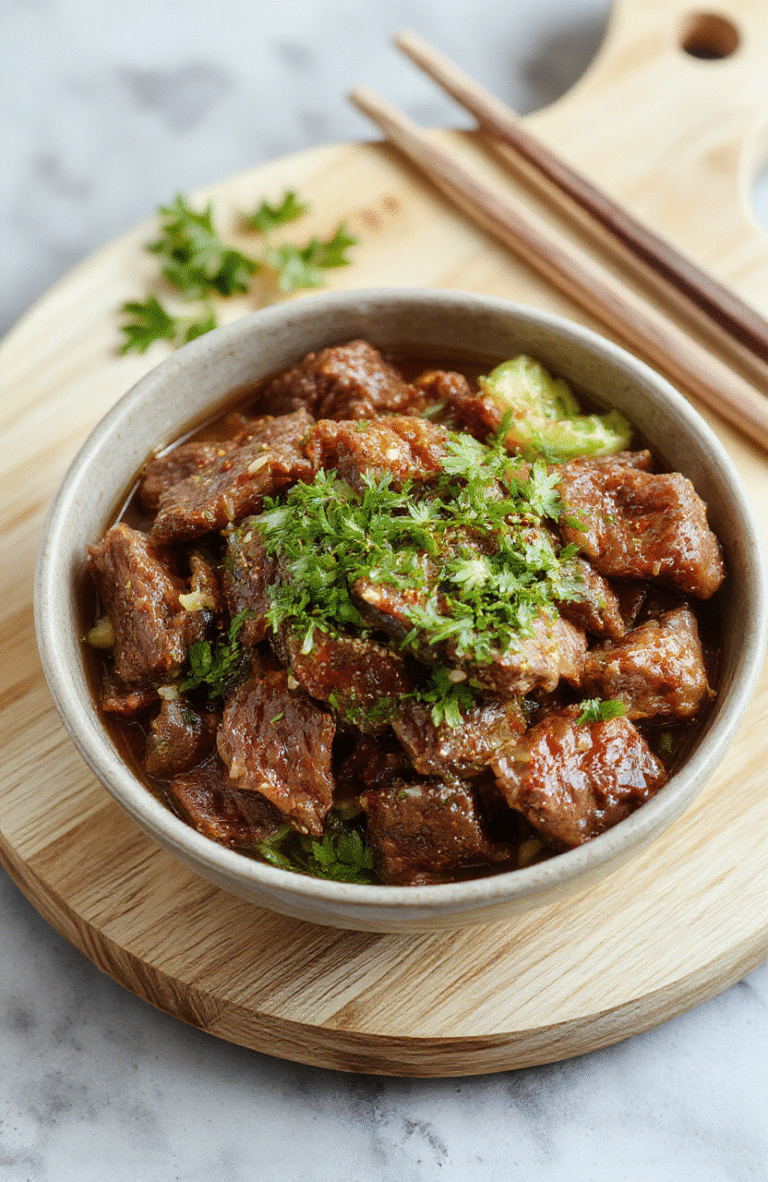
Easy Korean Beef Bowl
This quick and flavorful Korean beef bowl comes together in under 20 minutes with simple pantry ingredients. Tender beef strips are glazed with a glossy gochujang-based sauce and served over steamed rice with fresh toppings.
- Total Time: 20 minutes
- Yield: 4 servings
Ingredients
- 1 lb flank steak, sliced thinly against the grain
- 2 cups cooked white or jasmine rice
- 2 tbsp soy sauce
- 1 tbsp gochujang (Korean chili paste)
- 1 tbsp honey
- 1 tsp sesame oil
- 1 tsp grated ginger
- 2 garlic cloves, minced
- 1 tbsp vegetable oil
- Garnish: sesame seeds, sliced green onions, pickled radishes
Instructions
- Slice beef thinly against the grain and set aside.
- In a small bowl, whisk together soy sauce, gochujang, honey, sesame oil, ginger, and garlic.
- Heat vegetable oil in a large skillet over medium-high heat. Add beef and stir-fry for 2–3 minutes until lightly browned.
- Pour sauce over beef and cook for 2 more minutes, stirring constantly, until beef is coated and sauce thickens slightly.
- Serve beef over rice and garnish with sesame seeds, green onions, and pickled radishes.
Notes
- For extra speed, use pre-sliced beef or thaw frozen pre-marinated bulgogi.
- Make it gluten-free by using tamari instead of soy sauce.
- Add shredded carrots or spinach for extra veggies.
- Prep Time: 10 minutes
- Cook Time: 10 minutes
- Method: Stovetop
- Cuisine: Korean
Nutrition
- Serving Size: 1 bowl (about 1.5 cups beef + 1 cup rice)
- Calories: 420 Kcal
- Sugar: 8g
- Sodium: 780mg
- Fat: 14g
- Saturated Fat: 4g
- Unsaturated Fat: 8g
- Trans Fat: 0g
- Carbohydrates: 42g
- Fiber: 1g
- Protein: 32g
- Cholesterol: 75mg